
Loon Lake art guide
A lake can hide as much as it reveals. Compare three ways Joe Martin paints the space above, beneath and around water.
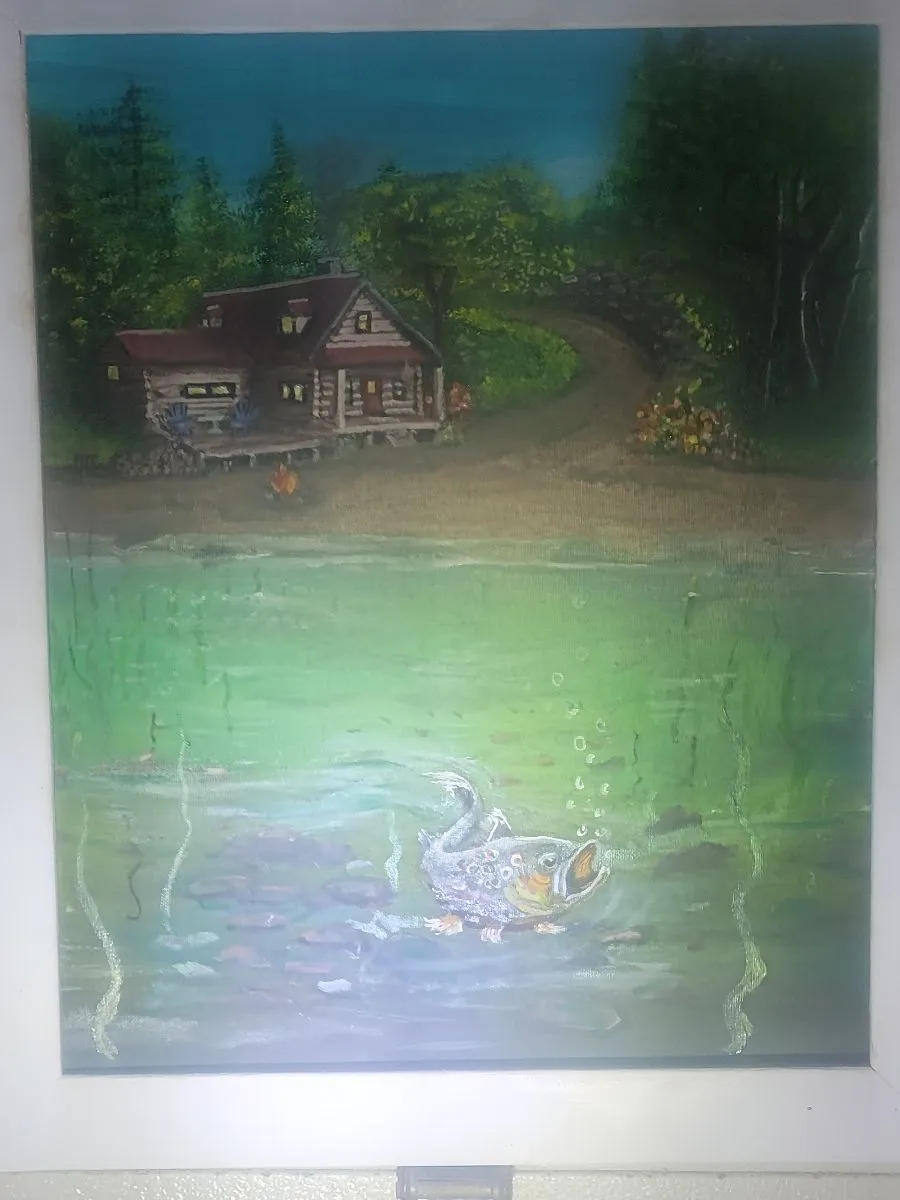
Bass below a lakeside cabin / Descriptive scene label
Two worlds in one view
Look past the surface.
In Bass below a lakeside cabin, the waterline divides the scene into two connected spaces. A cabin and wooded shore occupy the world above. Below, a bass becomes the central presence. The painting lets you see what an ordinary view from the bank would conceal.
Start by looking only at the upper portion. Notice the cabin's scale beside the trees. Then uncover the lower portion and compare the fish with that distant building. The contrast makes the underwater space feel close, even though the shore remains part of the same composition.
Follow the horizontal division across the picture. Does your eye stay with the bright surface, or move down toward the fish? That small experiment helps distinguish the subject you recognize from the area that holds your attention. You can enjoy both without needing the scene to represent a particular lake.
Look at the full paintingA starting point for Loon Lake readers
A map measures; a painting suggests.
Loon Lake is a nearby Illinois community south of Joe's home in Antioch. Lake County publishes separate depth contour maps for East Loon Lake and West Loon Lake in its bathymetric map collection. Those maps describe the underwater shape of real lakes. An artwork does something different: it can arrange an imagined viewpoint so that a hidden subject becomes visible.
Keep that distinction in mind when comparing these paintings. A dark passage may suggest deeper water, but darkness can also come from a shadow, a reflection or the artist's choice of contrast. A pale turquoise pool is not evidence of a measured depth or a particular water condition.
For a local viewing exercise, recall the difference between looking across a lake and looking down into its shallows. Then compare the bass painting's split viewpoint with the pool and waves below. None of these paintings is identified as a depiction of East or West Loon Lake, and the guide makes no claim about fish or habitats in either lake.
Lake County depth contour mapsFrom falling water to a rolling wave
Compare the direction of the marks.
Waterfall between rugged cliffs places a broad white cascade above a pale turquoise pool. The falling water draws your eye downward; the lighter marks across the pool carry it sideways. Compare the textured cliffs with the more open foreground water. Their different rhythms help separate solid rock from a moving surface.
In Horse-shaped clouds over the sea, bands of breaking waves repeat across the lower part of the image. Above them, pale flowing forms suggest horses within the pink and blue sky. Here the water does not reveal an underwater subject. Instead, its motion connects with an imaginative sky.
View all three photographs at a similar size. Find the largest quiet area in each before studying the small marks. The bass has its underwater setting, the waterfall opens into a pool, and the sea is broken into repeated bands. Which arrangement gives your eye a place to rest?
Choosing a piece to live with
Compare the whole shape before the detail.
A painting that looks spacious on a screen may feel different on your wall. Ask Joe for its canvas and outside frame measurements, then mark that rectangle with paper. Look from the seat or doorway where you would normally see it. Leave room around the frame and account for furniture below.
Next, return to the photograph and identify the feature you would want to notice each day: the bass beneath the waterline, the falling white water or the imagined horses in the clouds. Request additional photographs if color, surface texture or frame condition will affect your choice. Screen brightness cannot establish how a painted surface will look under your own lights.
Continue with the Benet Lake guide to stories around water, or compare stillness and movement in the Cross Lake guide. Read Joe's own words about finding relaxation in acrylic painting.
Ask about the actual painting.
- Send the individual artwork link.
- Confirm the descriptive label or official title.
- Ask for canvas and framed outside measurements.
- Confirm frame inclusion, condition, price and availability.
- Discuss shipping before making a purchase.
Email Joe at martin312dee@yahoo.com. The contact form is a preview and does not send messages. No local studio, pickup or commission arrangement is promised.
Questions for Loon Lake readers
Do these paintings show Loon Lake?
No location is confirmed for these scenes. This guide is for Loon Lake readers exploring Joe Martin's collection, not a claim that the paintings depict East or West Loon Lake.
Can the color in a painting tell me how deep the water is?
No. Color can suggest depth, light or mood in an artwork, but it is not a measurement. Actual lake depths require a surveyed map; a painting is not a navigation aid.
Why compare a lake with a waterfall and the sea?
The three compositions show different treatments of water: a cutaway view beneath a surface, a falling column meeting a pool, and waves beneath imagined horse-shaped clouds. Comparing the marks makes those choices easier to notice.
Are the names shown here official artwork titles?
Bass below a lakeside cabin, Waterfall between rugged cliffs and Horse-shaped clouds over the sea are descriptive scene labels. Confirm the title and other details with Joe before buying.
Is there a studio to visit in Loon Lake?
No public studio or walk-in gallery is offered here. Joe is based in Antioch, Illinois, and sells online with shipping. Ask him by email about current availability and shipping details.
What should I include in an artwork inquiry?
Email the individual artwork link, your questions and the wall dimensions you are considering. Ask about canvas size, frame inclusion, condition, price, availability and shipping. The website contact form is a preview and does not send messages.